
Juneteenth, Generational Wealth, and the Power of Empathy
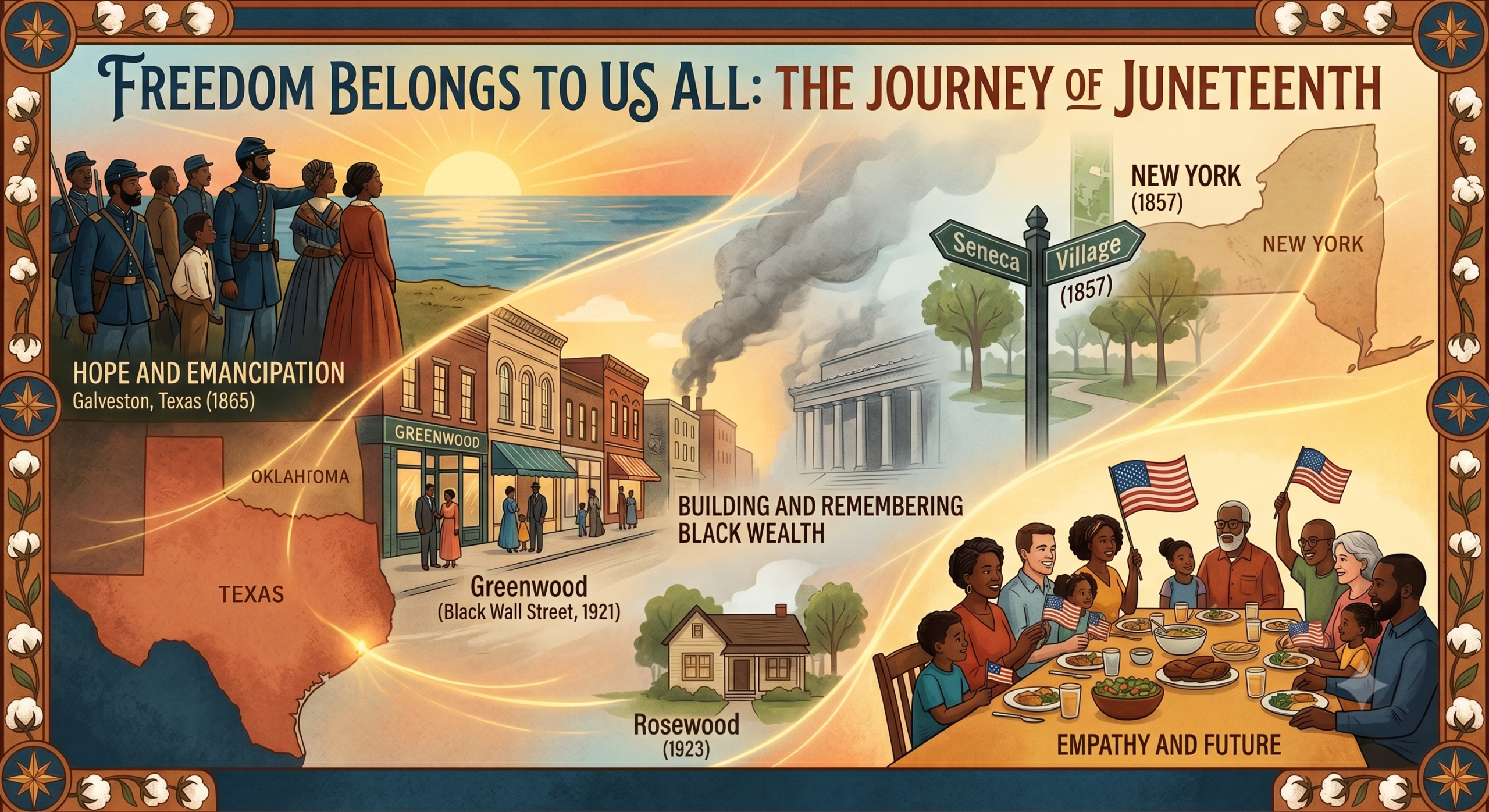
When we celebrate Juneteenth, we are not just marking a specific date in history; we are celebrating a profound leap forward in the ongoing story of American freedom. On June 19, 1865, when Union soldiers arrived in Galveston, Texas, to ensure all enslaved people finally knew they were free, it signaled a vital moment: America could not truly be the land of the free until freedom was real for everyone. Understanding this history matters deeply for all of us because our present is completely intertwined with our past. True freedom requires honesty, and respecting one another starts with listening to the full, unvarnished story of our nation.
Confronting this past helps us understand the systemic hurdles that persisted long after emancipation. For instance, the legacy of slavery and post-Reconstruction policies played a massive, direct role in creating unfair housing practices. For decades, federal and local systems utilized redlining and predatory lending to systematically deny families of color access to safe, affordable housing. In many places, Black families were completely barred from purchasing homes in thriving neighborhoods, or they saw their properties unjustly seized. In the most devastating cases, prosperous communities were totally destroyed by racial violence or forced displacement. We see this painful truth in the burning of Tulsa’s thriving “Black Wall Street” in 1921, the erasure of the town of Rosewood in 1923, and the forced dismantling of Seneca Village to build New York’s Central Park.
Because homeownership has historically been the primary driver of financial security in America, these discriminatory barriers directly caused families of color to lose out on generations of wealth. When families cannot build equity or pass a home down to their children, the financial gap widens over decades. This is not ancient history; it is a direct line from past injustices to modern wealth disparities. Recognizing this truth is not about assigning individual guilt today. Rather, it is about having the courage to see the uneven playing field that exists because of that history, and respecting the resilience of those who survived it.
So, how do we bridge this gap and heal these deep historical fractures? The path forward lies in coming together through intentional empathy, active listening, and a genuine commitment to understanding one another. When we step into someone else’s shoes and truly listen to their family’s journey, our perspectives shift. We stop seeing history as abstract facts and start seeing it as human stories that affect our neighbors every single day.
Juneteenth is a beautiful opportunity for all Americans to unite in that spirit of empathy. By celebrating the end of slavery together, we reaffirm our shared dedication to liberty, equity, and human dignity. We can collectively support policies that expand housing access, foster community investments, and close the generational wealth gap. Let’s use this day to lean into conversation, celebrate freedom, and build a brighter, fairer future where every American has a place to truly call home.