Easing Inflation and Stable Horizons Set the Stage for South Bay’s Housing Future
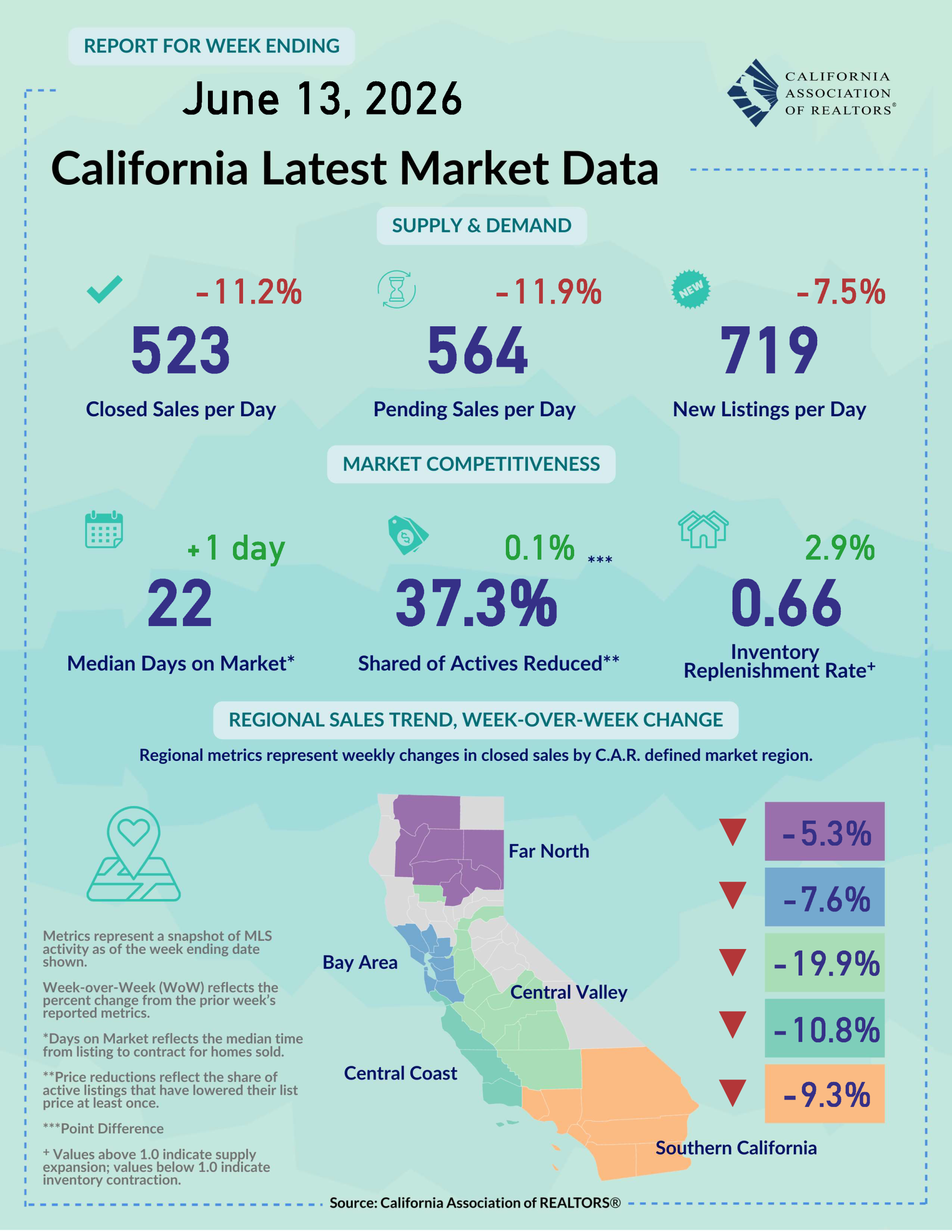
The California Association of REALTORS® (C.A.R.) market report for the week ending June 13, 2026, highlights a cautious and uneven housing landscape. Regionally, Southern California closed sales fell 9.3% week over week. This cooling trend directly impacts the highly coveted South Bay cities—including Manhattan Beach, El Segundo, Redondo Beach, Torrance, Palos Verdes, Hawthorne, Gardena, Carson, Lomita, and San Pedro. Across the state, market competitiveness is shifting: properties now average 22 median days on market, inventory replenishment is contracting to 0.66, and 37.3% of active listings have reduced their prices.
A major catalyst for this shifting sentiment is the resolution of the U.S.-Iran war. The impending agreement to reopen the Strait of Hormuz is expected to ease energy-driven inflation. Headline inflation spiked to a three-year high of 4.2% annually in May, heavily driven by a 23.5% surge in energy costs. While the end of the conflict brings optimism for stabilized pricing, the Federal Reserve is projected to keep interest rates steady, meaning South Bay buyers will face sustained high borrowing costs.
Local market dynamics are further complicated by macro-trends in equity and development:
- The Rate “Lock-In” Effect: Homeowners in affluent communities like Manhattan Beach and El Segundo are holding onto low-rate primary mortgages. Instead of selling, many are opting for second liens to extract equity. National equity withdrawals hit a five-year first-quarter high of $47 billion, driven heavily by borrowers from 2020 to 2022. This reduces standard inventory and elevates overall household debt burdens.
- Escalating Construction Pressures: For growing areas like Carson, Torrance, and Hawthorne, building new housing supply faces steep regulatory hurdles. Average government regulatory costs for a single-family home have surged more than 40% since 2021 to $131,734, accounting for 26.4% of the final price.
- Rising Foreclosures: Although strong equity limits widespread defaults, California foreclosure filings jumped 14% year over year, requiring close monitoring in working-class hubs such as Gardena, San Pedro, and Lomita.
Ultimately, the South Bay housing market remains anchored by solid fundamentals, but buyers and sellers alike must navigate soft demand and lingering economic pressures.
Source: California Association of REALTORS® (C.A.R.)